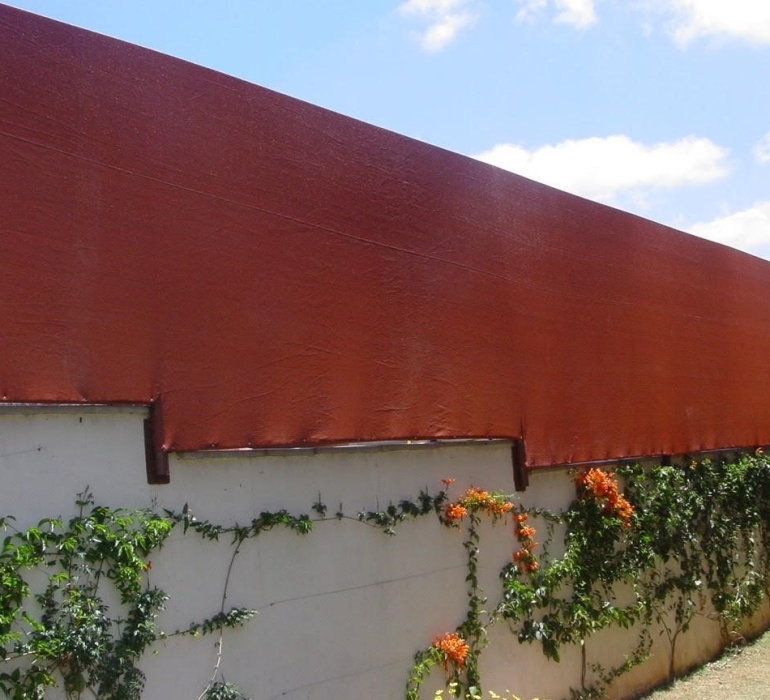
Ripstop canvas is an ideal outdoor material because of its unique woven grid of reinforcement threads. This construction stops small tears from spreading, making the fabric exceptionally tear-resistant without added bulk. It balances breathable comfort with rugged weather, water, and UV resistance.
The key properties that make it a premier choice for outdoor gear—such as tents, vehicle covers, and safari gear—include:
- Superior Tear Prevention: The defining feature is its woven grid of thicker, stronger threads (often nylon or polyester) in a crosshatch pattern. If the canvas is punctured, this grid halts the tear from widening, saving your gear from total ruin.
- Exceptional Strength-to-Weight Ratio: It offers the heavy-duty ruggedness of traditional canvas but remains lightweight, allowing for easier packability and handling.
- Weather & Environmental Resilience: Ripstop canvas can be treated with specialized coatings (like polyurethane or acrylic) to become water-repellent, rot-proof, and fade-resistant. It handles prolonged sun exposure much better than untreated fabrics.
- Breathability: Unlike completely synthetic or plastic tarps, the blended cotton base in ripstop canvas breathes well. This helps regulate temperature and prevents the severe buildup of condensation and mold.
NB: Ripstop canvas is a woven fabric with a reinforcing grid of stronger threads stitched in at regular intervals. If the fabric is punctured or nicked, that grid stops the tear from spreading — so a small hole stays a small hole instead of running across the panel. It’s the same principle used in parachutes and sails, applied to heavy camping canvas.